
Jay’s Audio Lab Visual Identity
Jay’s Audio Lab will soon enter into a new chapter. A milestone in Jay’s journey in home audio. After many years relentlessly reviewing and showcasing audio gear in Florida with dedication, passion and a little bit of craziness, he decided to move in Texas. Supported by his smart and clever wife who embarked in this adventure observing a viabile opportunity and not only a mere hobby they decided to invest time and resources aimed to improve the whole Audio Lab concept.
The goal is to bring his passion – turned in the meantime into a full job – to an another level with new welcoming listening locations and a more focused/tailor made consultation services. His steady commitment already visible while exploring “regular” Hi-Fi equipment further improved when he fully embraced the High-End segment. He spotted the need to serve the clientele looking for fine audio reproduction belonging to the High-End and Ultra High-End field providing valuable recommendations and advices while still maintaining down-to-earth approach successfully attracting quiet a broad audience.
The two new listening rooms currently underway are meticulously tuned to host audio systems that are supposed to offer no-compromise sound experiences.
The whole project is openly shared by Jay and many of his followers enthusiastically supported him providing a lot of advices and opinions on the matter. While welcomed and appreciated, I’m confident that all these inputs are definitely overwhelming and potentially confusing for Jay. Moreover, it’s difficult to discern which claims are solidly based (i.e. real expertise with references) and which come by hearsay.
Despite the risk of further increase the “entropy” I decided to chime in and try to give a cue/inspiration/help. I started from the graphical identity of Jay’s channel. Here’s a proposal/idea of a revised logo that visually identifies the new venture. I tried to keep some typographical aspects of the current logo while changing the general visual.
The logo elements represent the concept that Jay’s Audio Lab provides refined and balanced audiophile experiences (the sound waves) through an immersion of the listener into an ideal sound bubble (the circle). The “audiophile experiences” is in fact used as a payoff of the brand to express the idea of a non ordinary experience. Not only sonically: the human relation with Jay, the pleasant location as a whole, the perceived trust, the curated approach are all part of the “experience”.
Here’s the colored version of the logo. Colors are of course customizable: I chose a green variant due to the feelings expressed by Jay in relation to the military.





Entrance
Here’s a simulation of the entrance door in 5 color variants. The hues are mostly pastel to not overcharge, especially when used inside. Bold colors tend to reduce the perceived size of a room. They can be inspiring and exciting as well as annoying in the long term. In the caption is listed the Pantone reference. Keep in mind that monitor colors aren’t exactly identical to real colors. Moreover the used Pantone reference is based for printing. Pigments for wall paints are different. It’s advisable to check with real architectural coatings producers like PPG Industries or similar to see the real effect of color chips. Still, it gives a basic idea for a simulation.
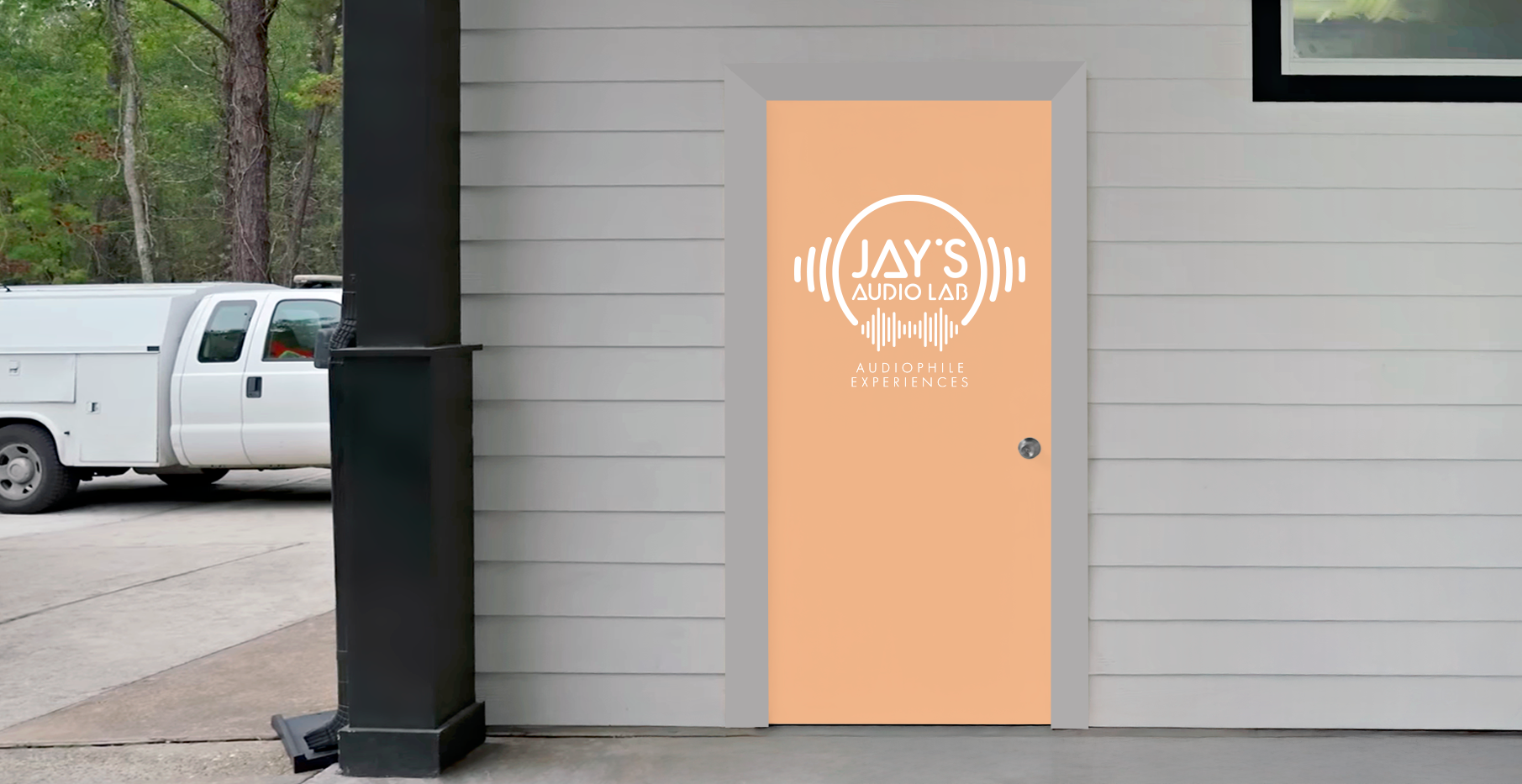
Entrance – Pantone 155.
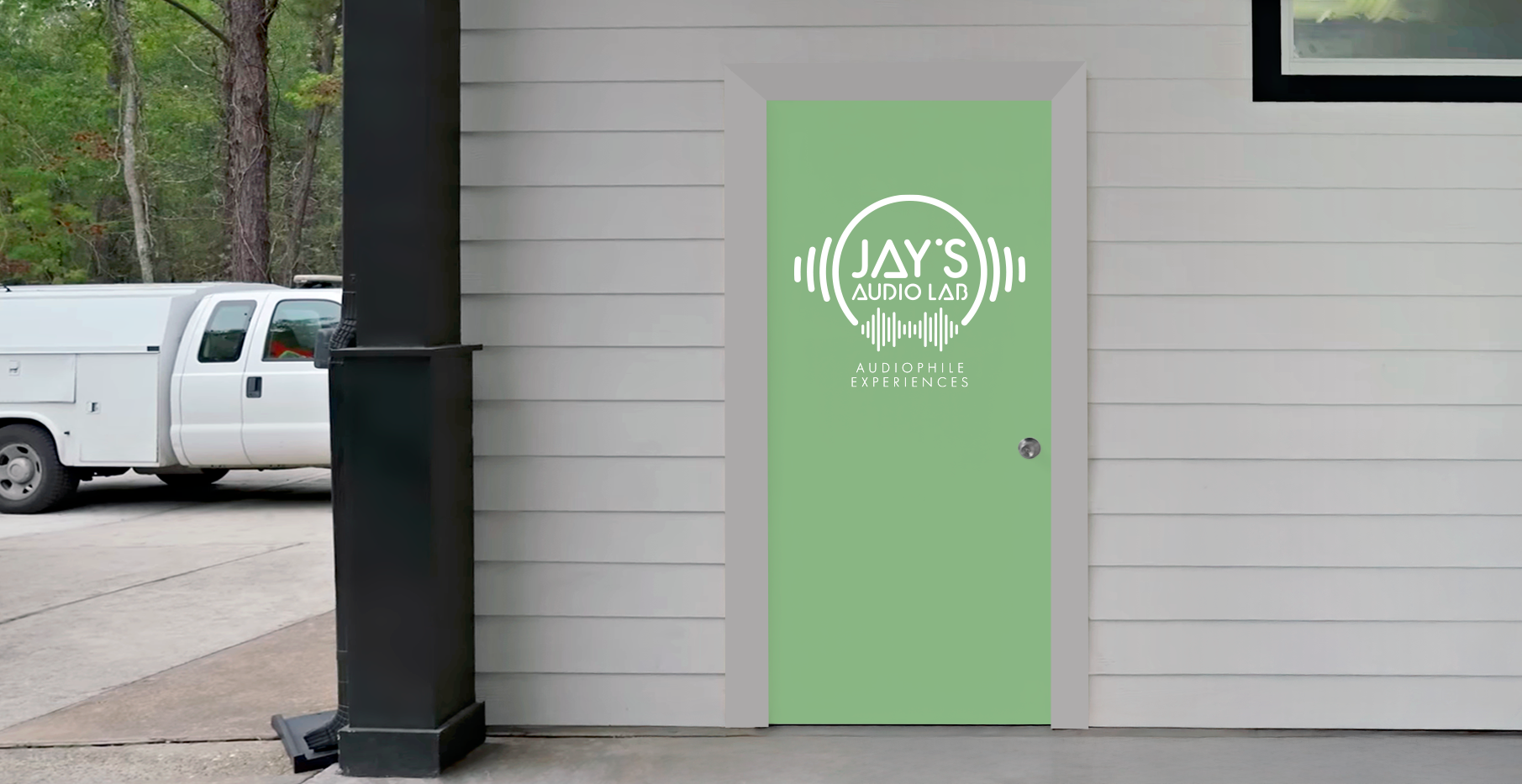
Entrance – Pantone 578.
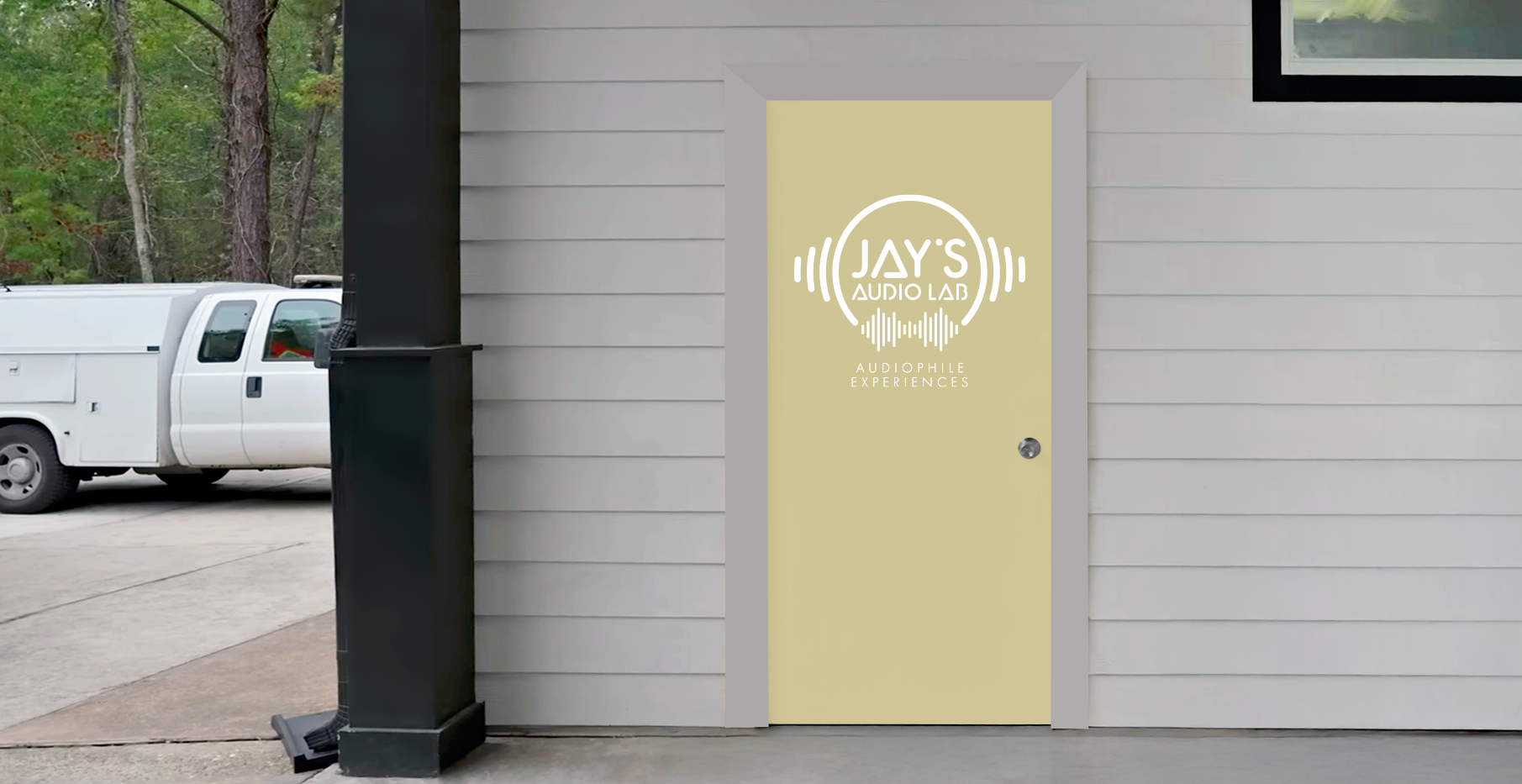
Entrance – Pantone 614.
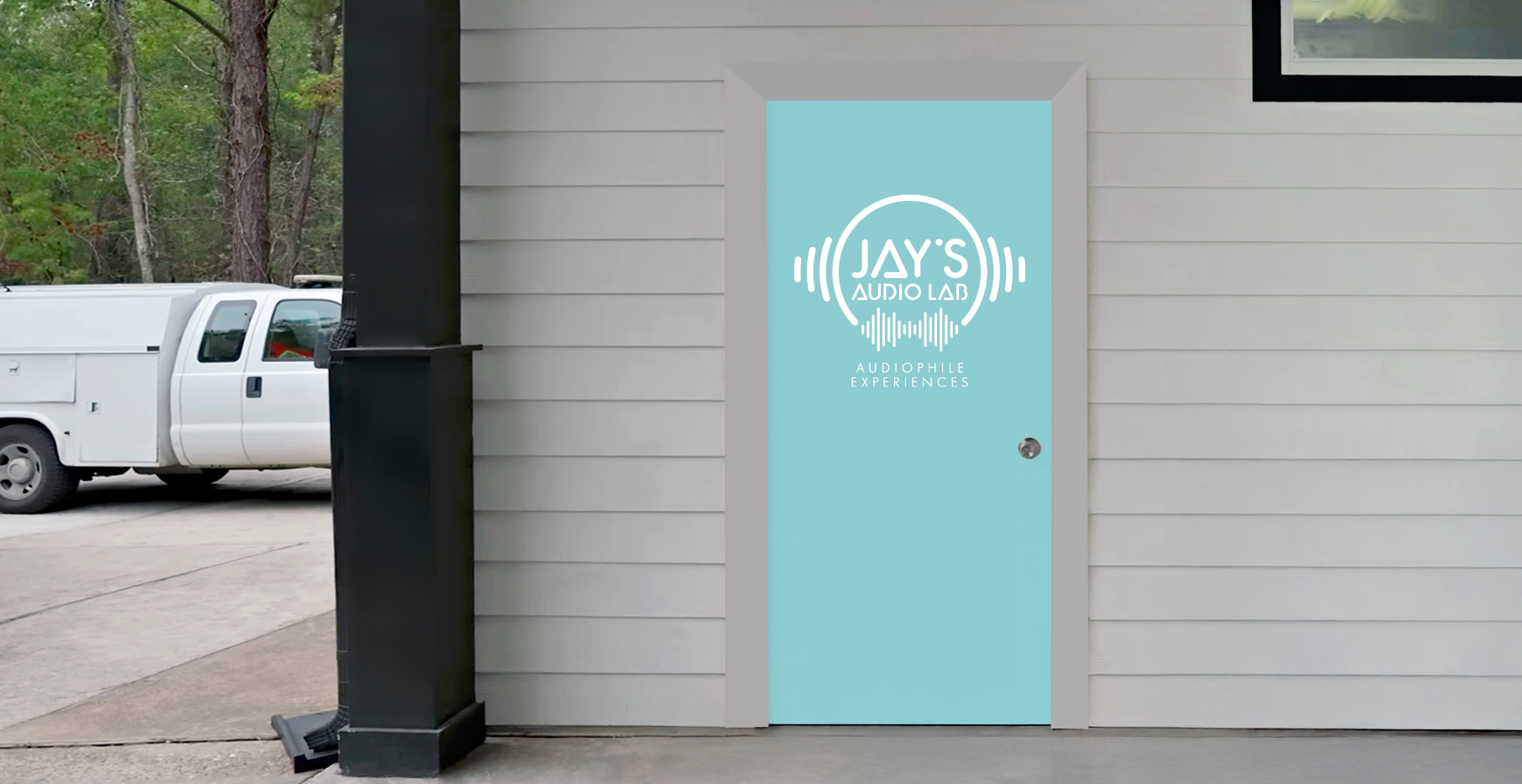
Entrance – Pantone 628.
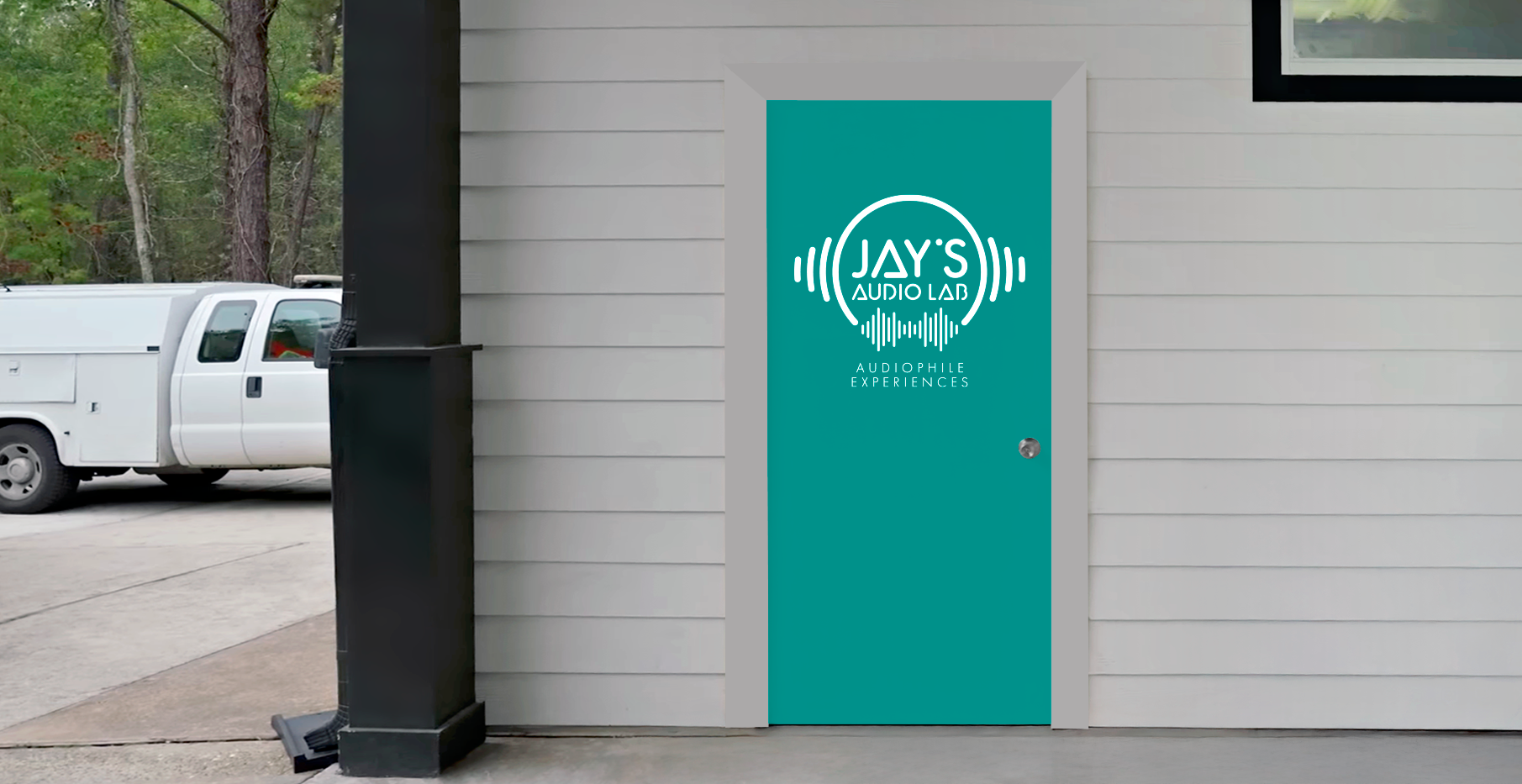
Entrance – Pantone 3272.
Indoor Room
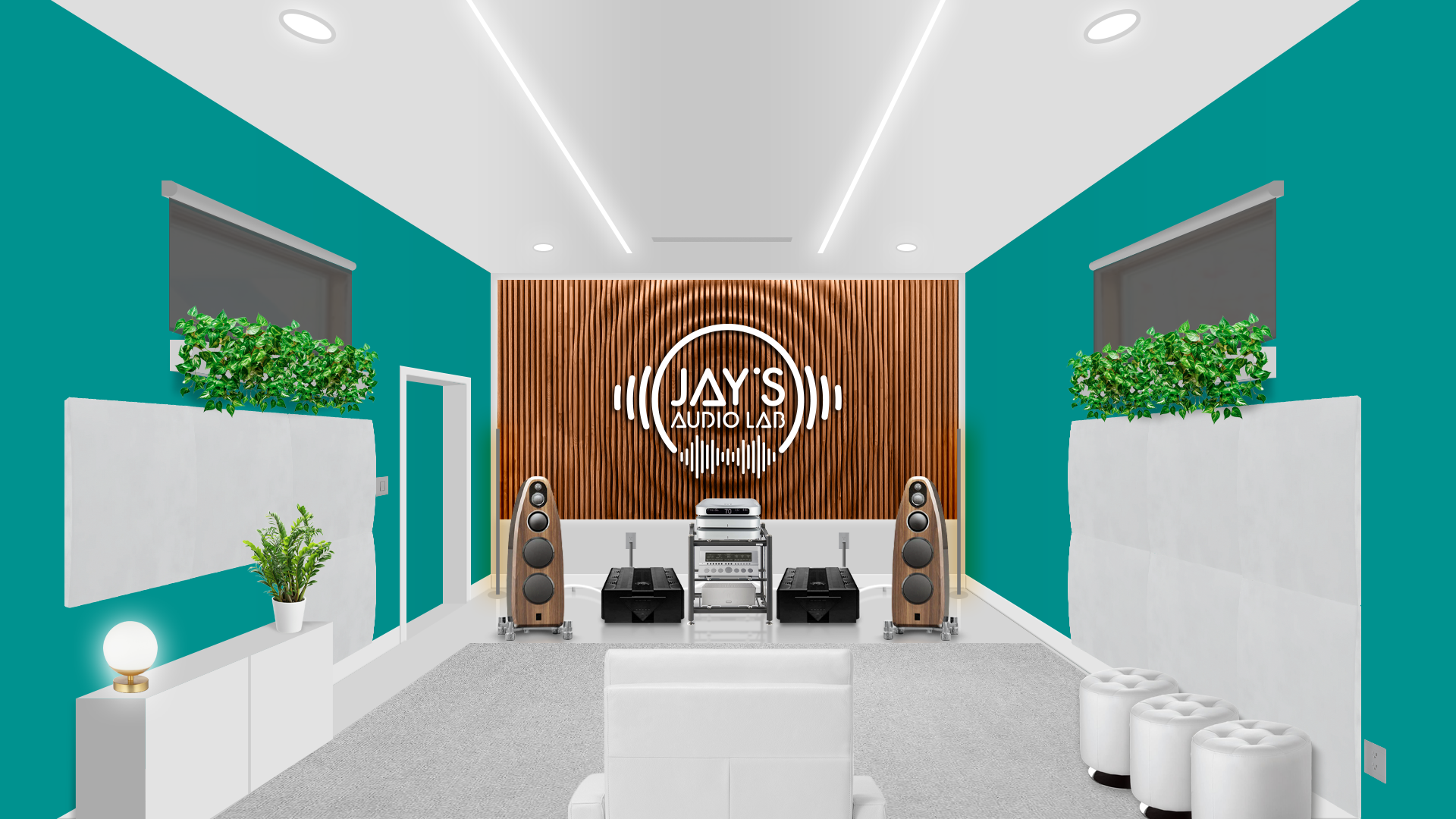
Here are visualized the simulations of the listening room viewed from behind the listening chair. Again, the 5 colors are showcased. Every color is represented in plain (matte) paint, Venetian (spatulate effect) and plain in dark conditions (accent lighting only).
Pantone 155
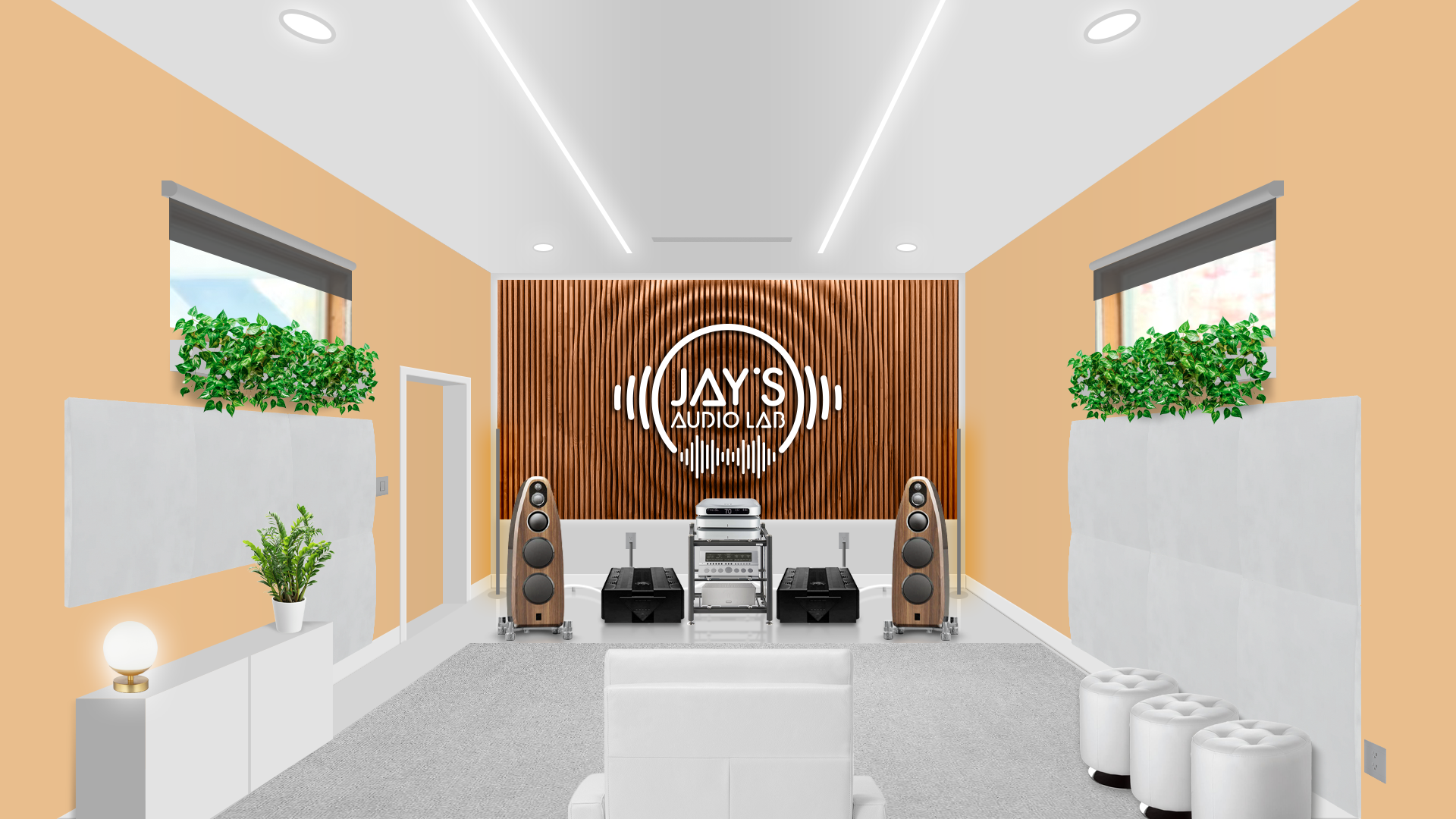
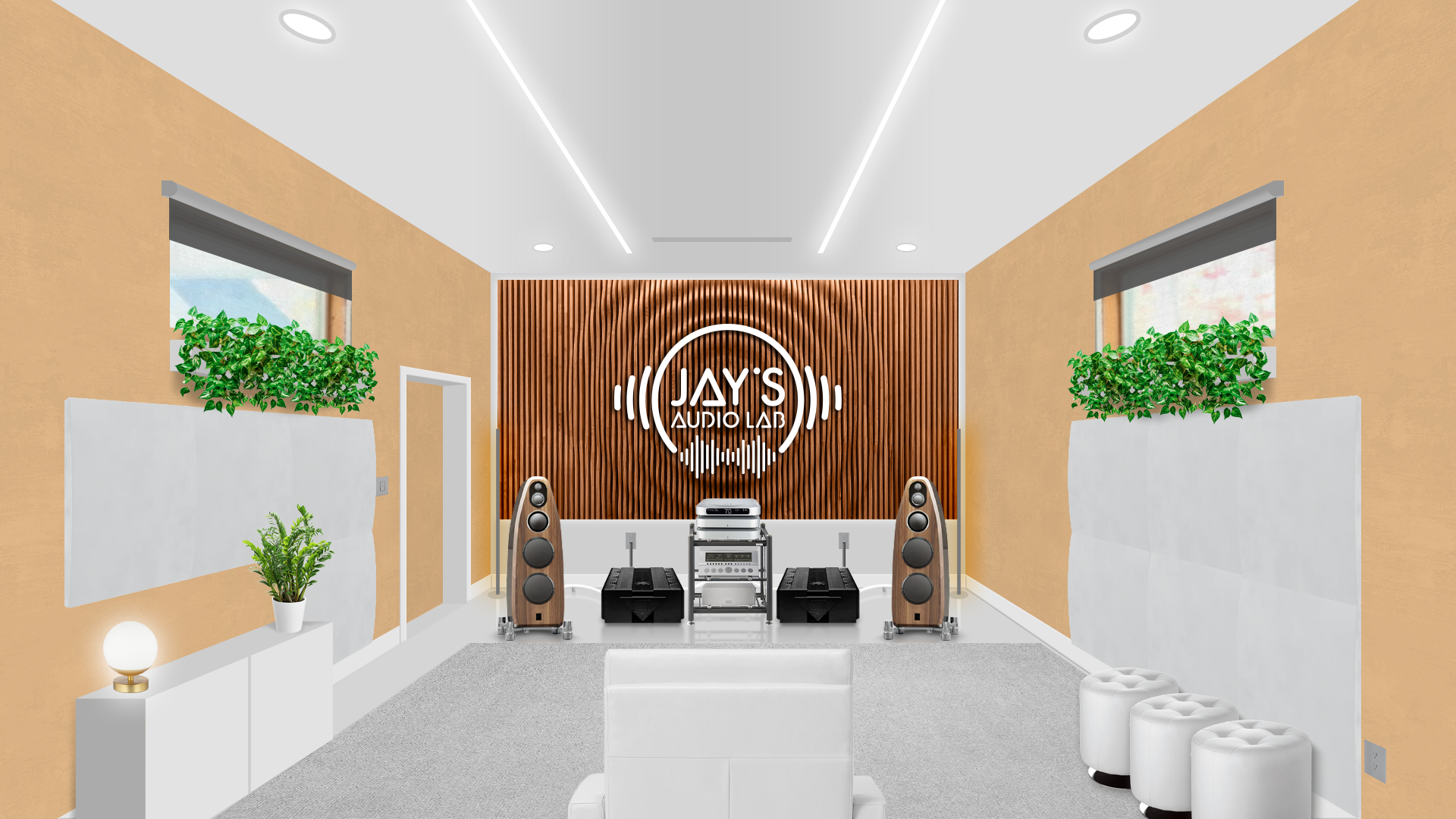
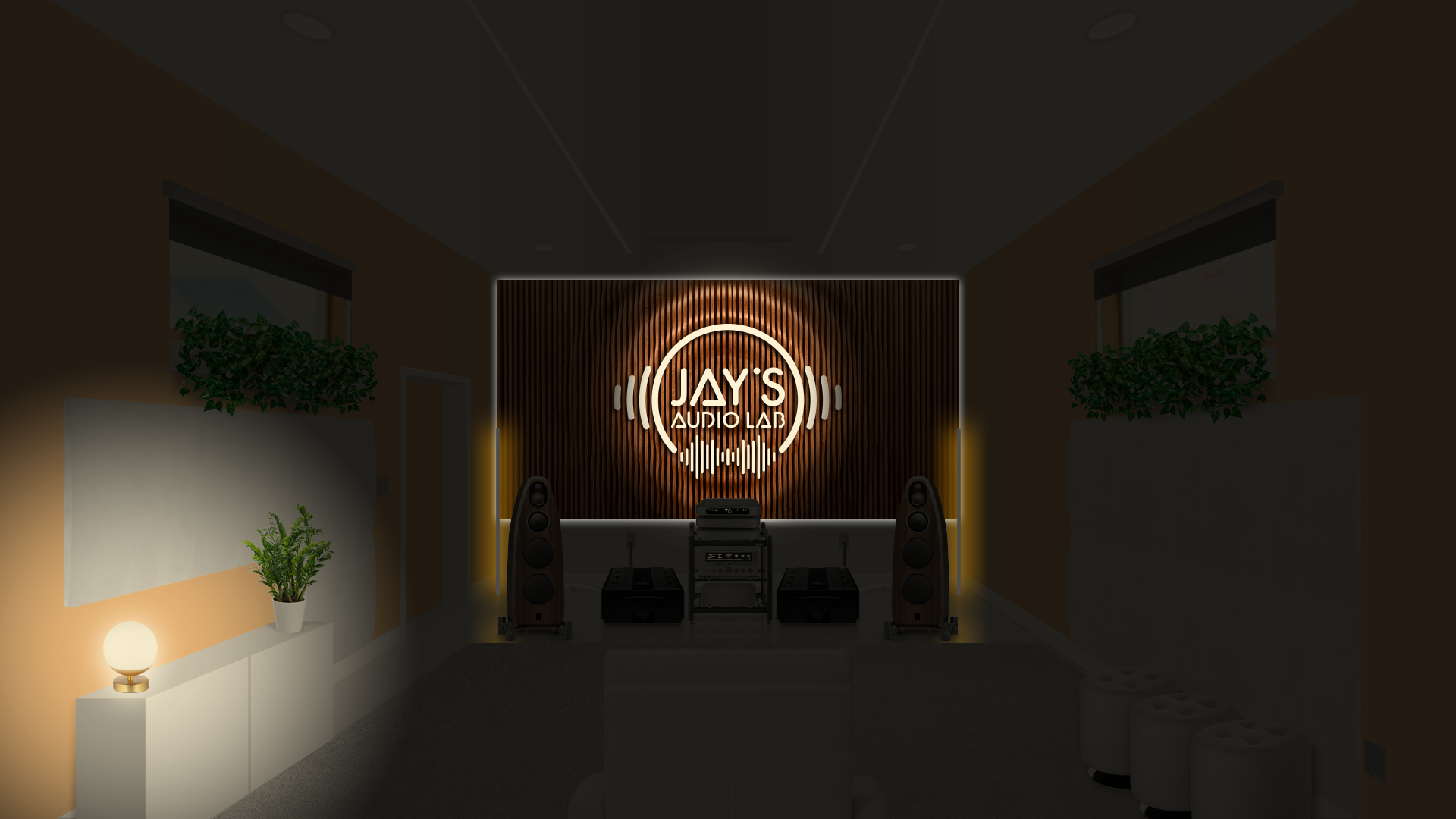
Pantone 578
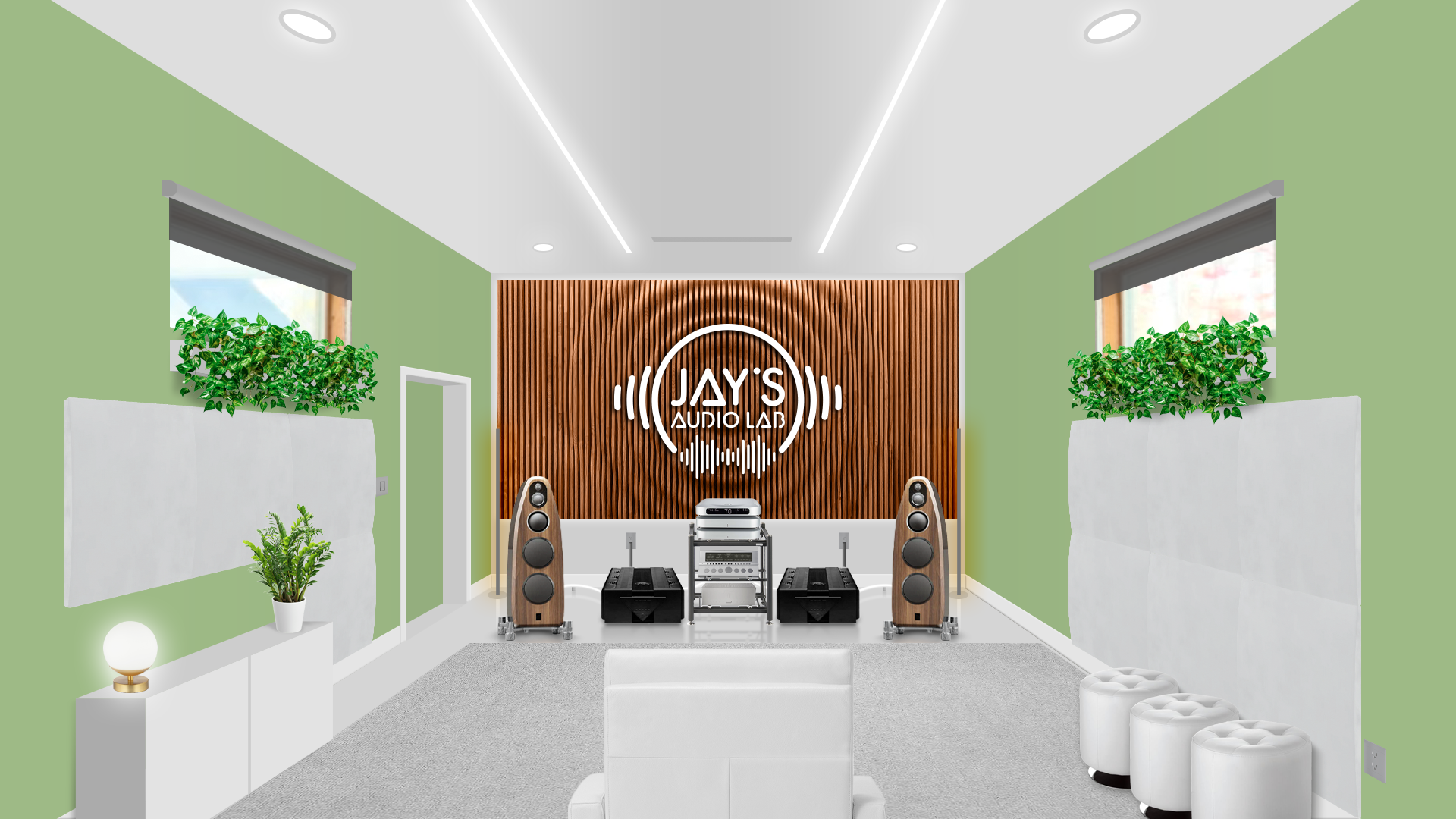
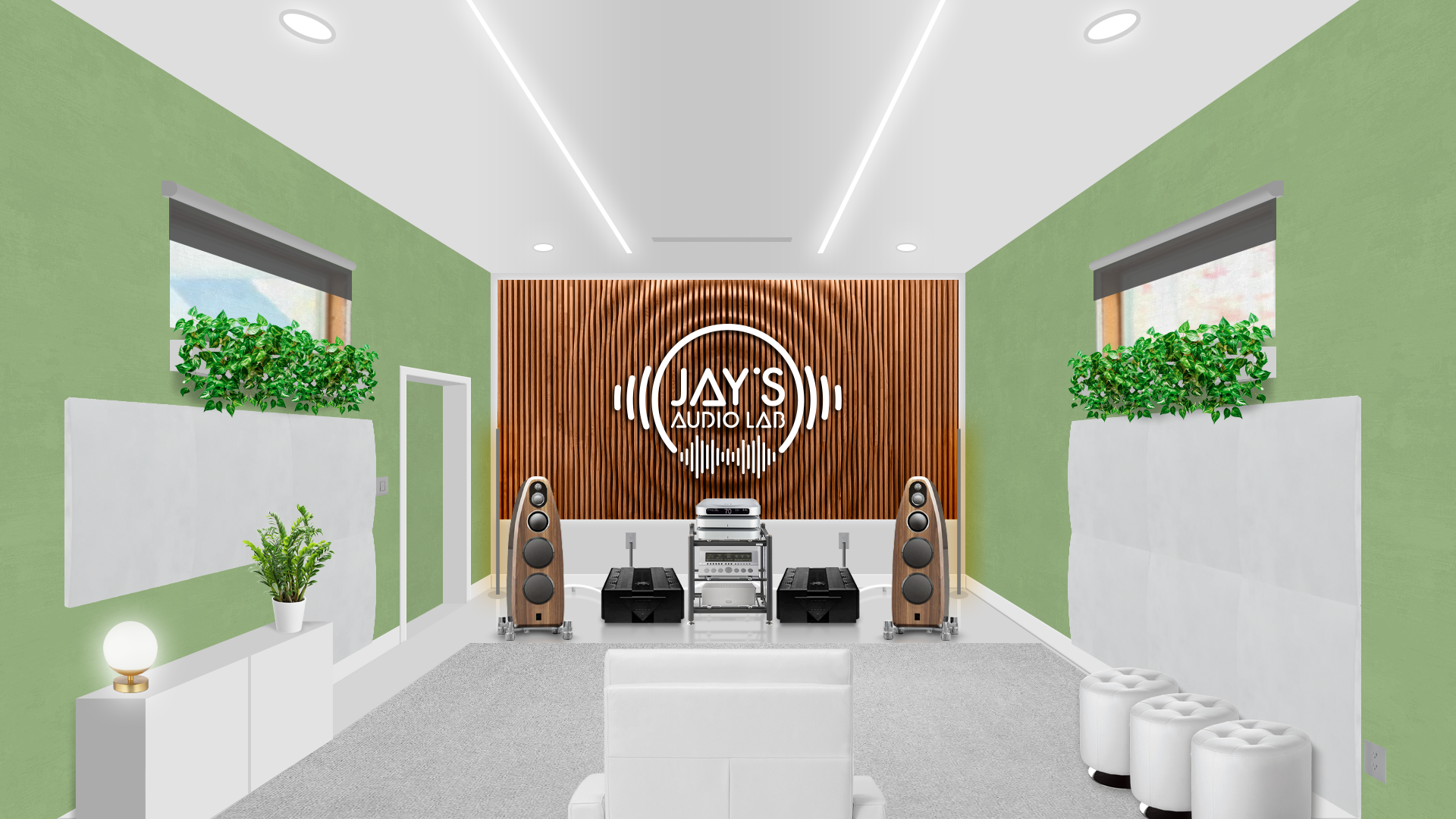
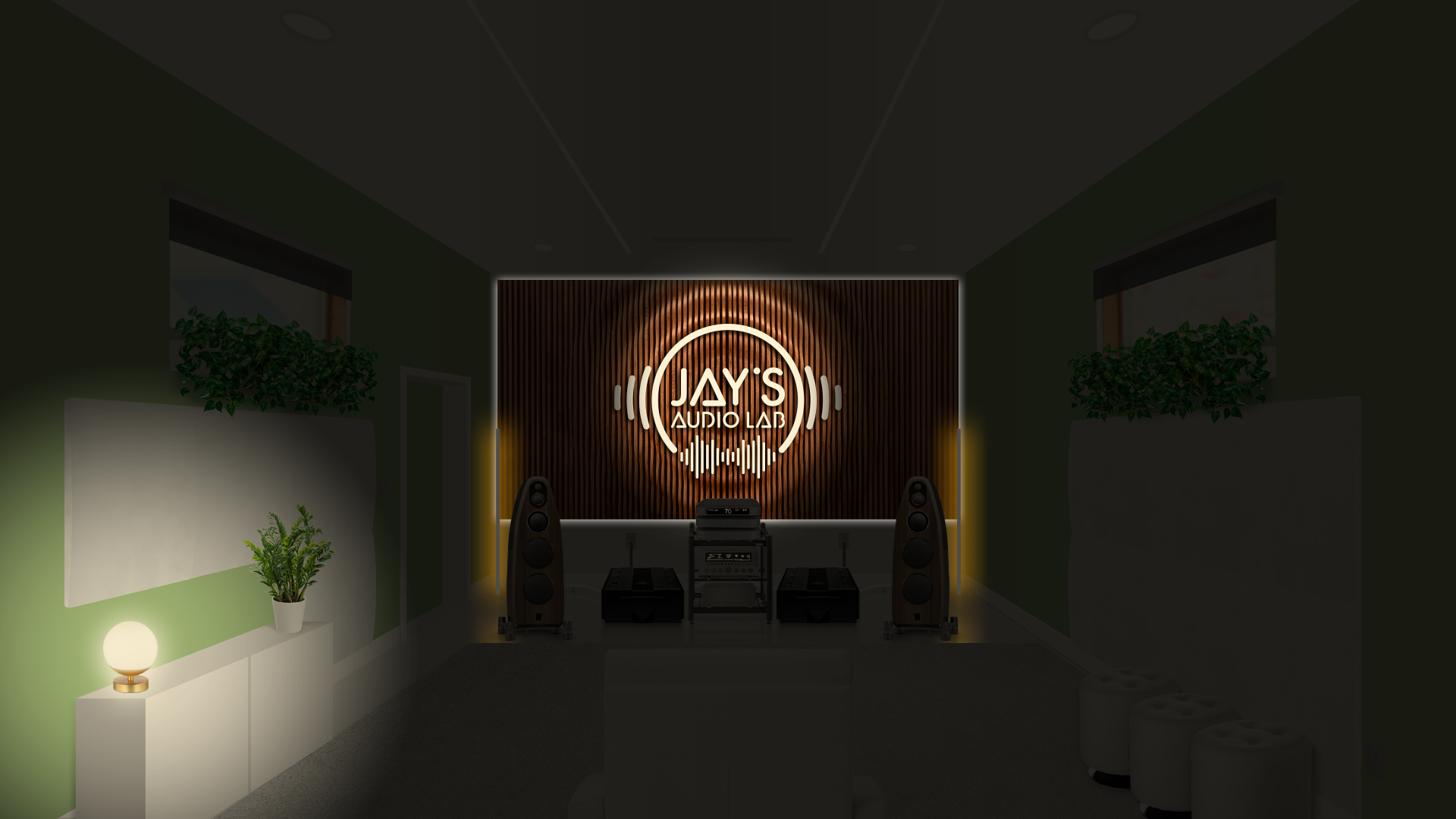
Pantone 614
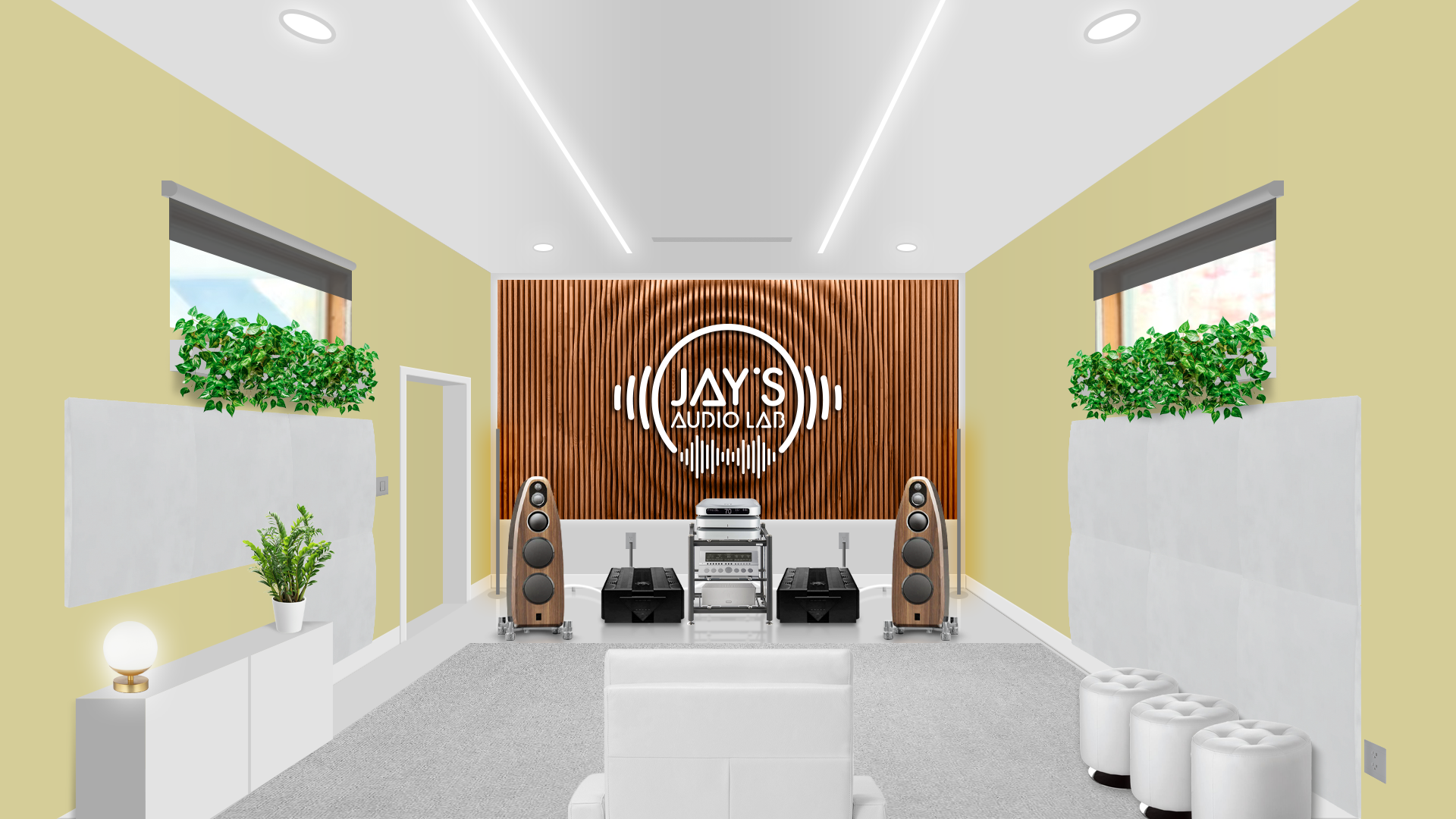
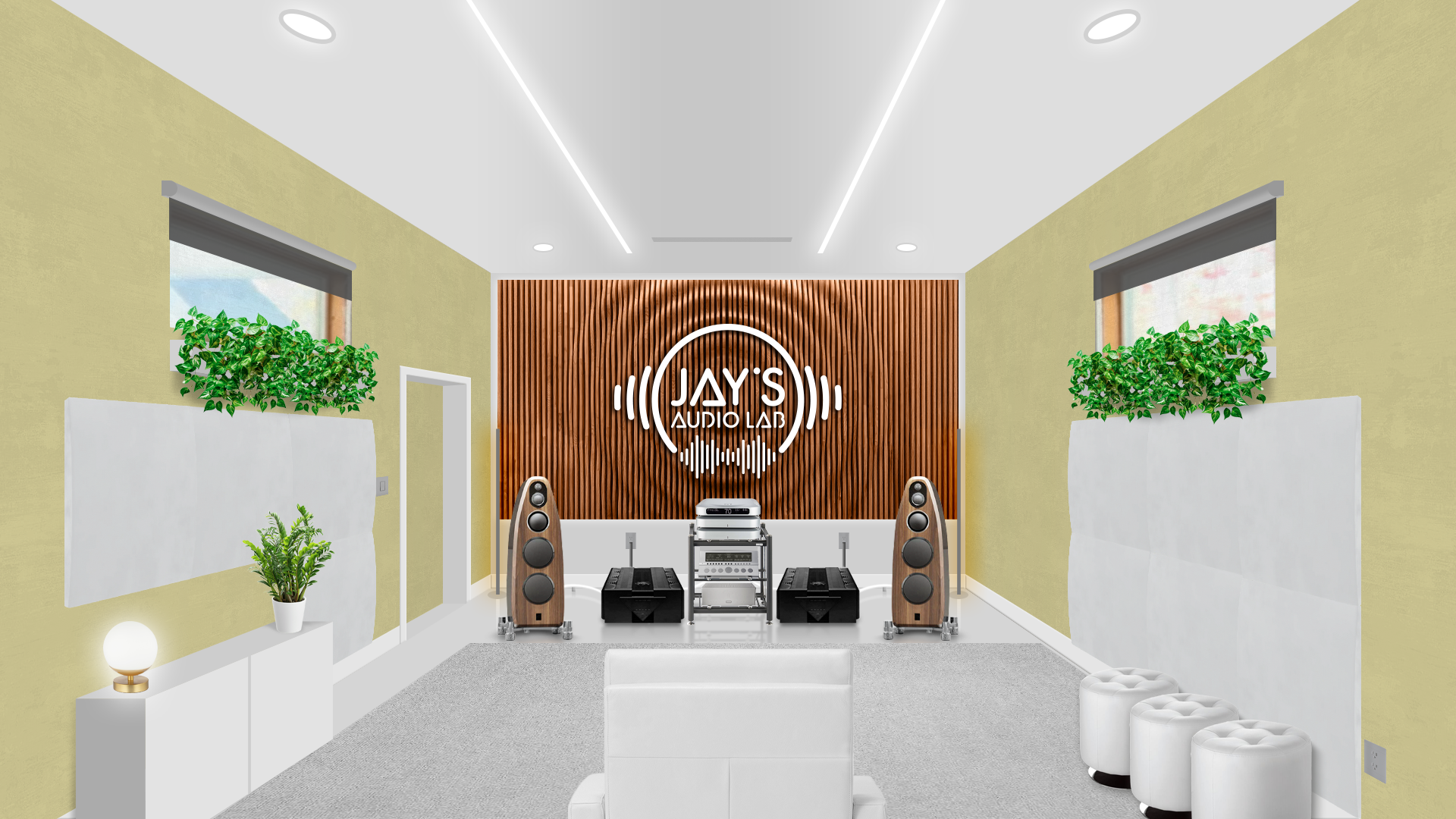
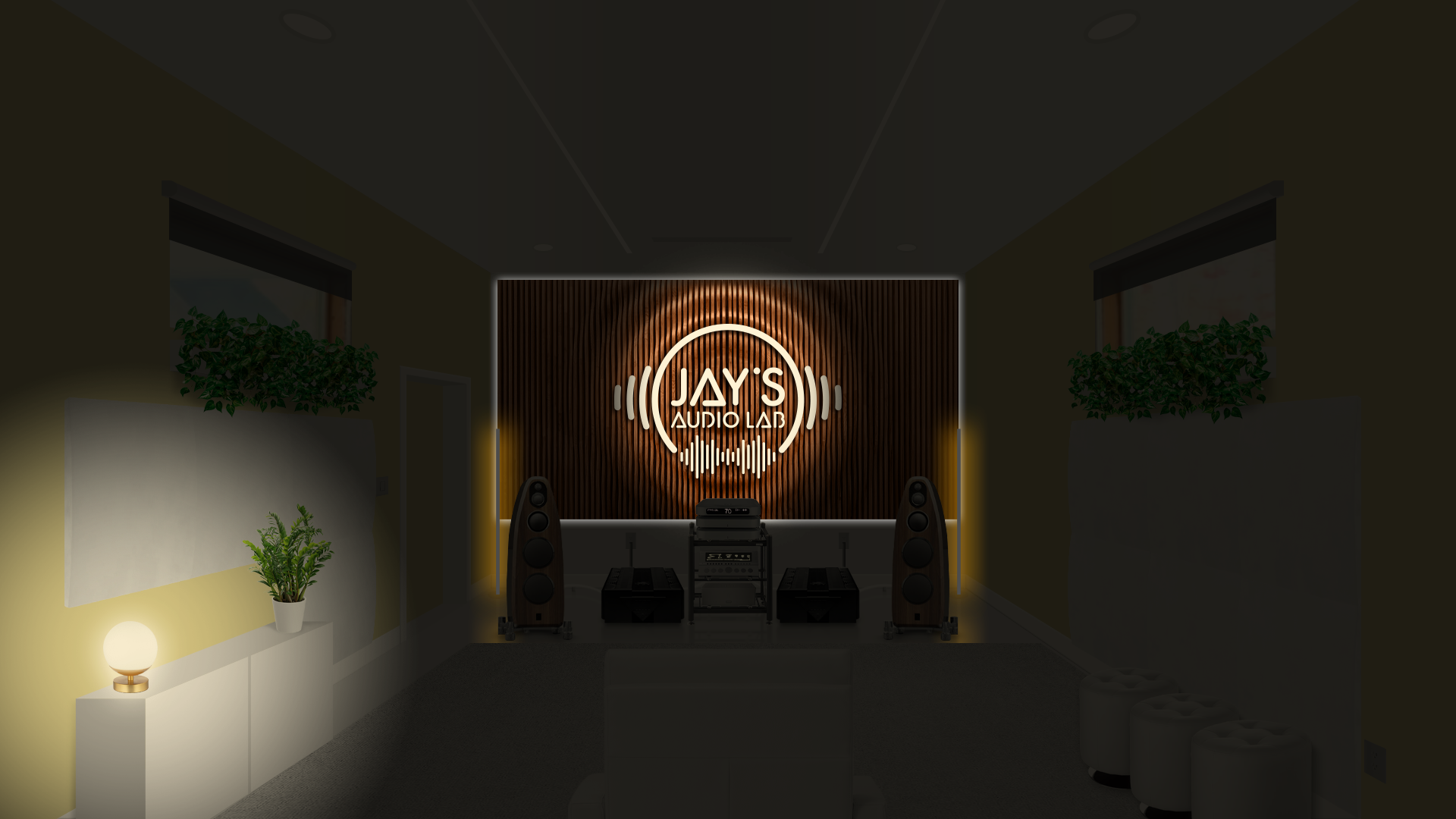
Pantone 628
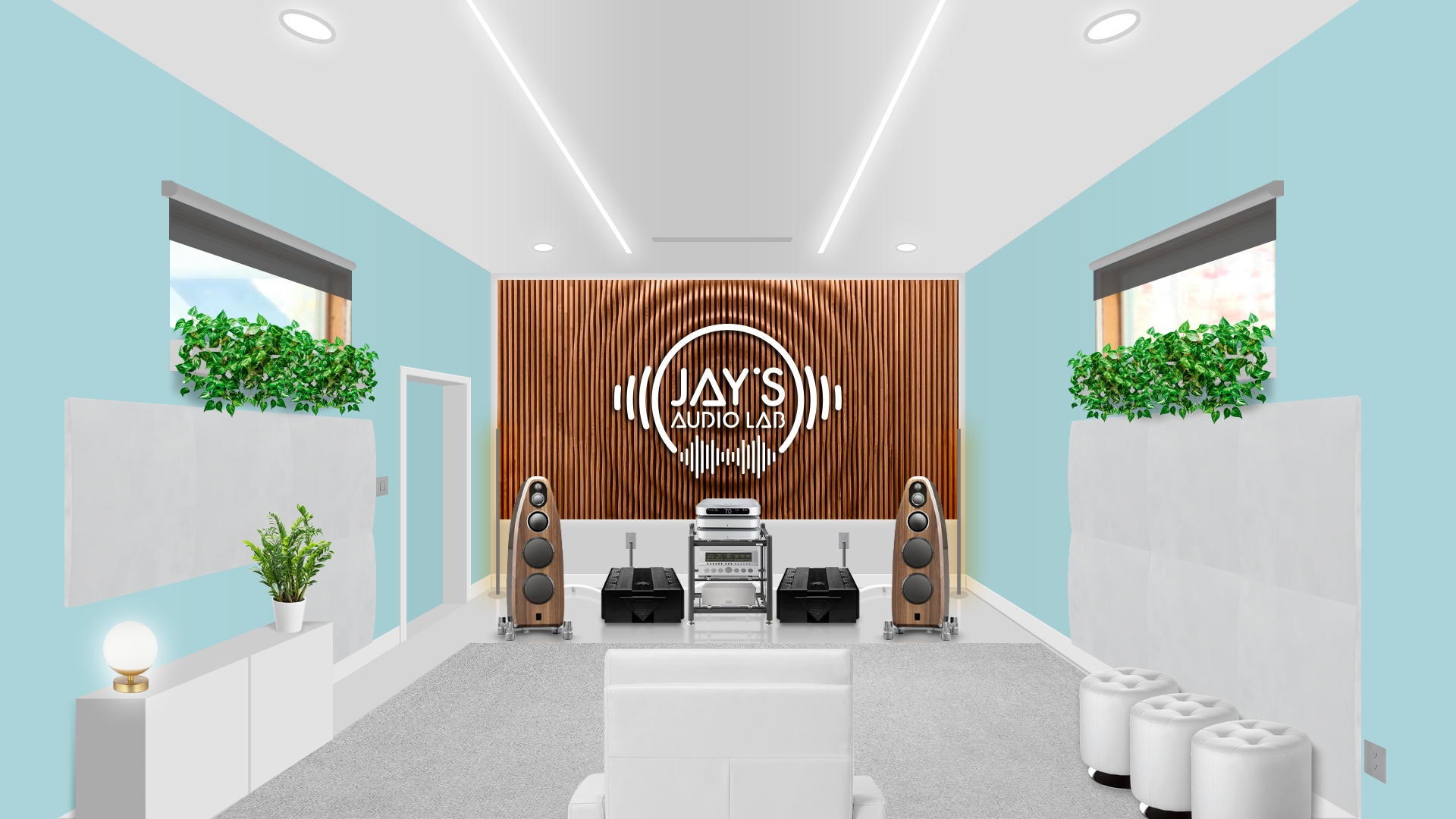
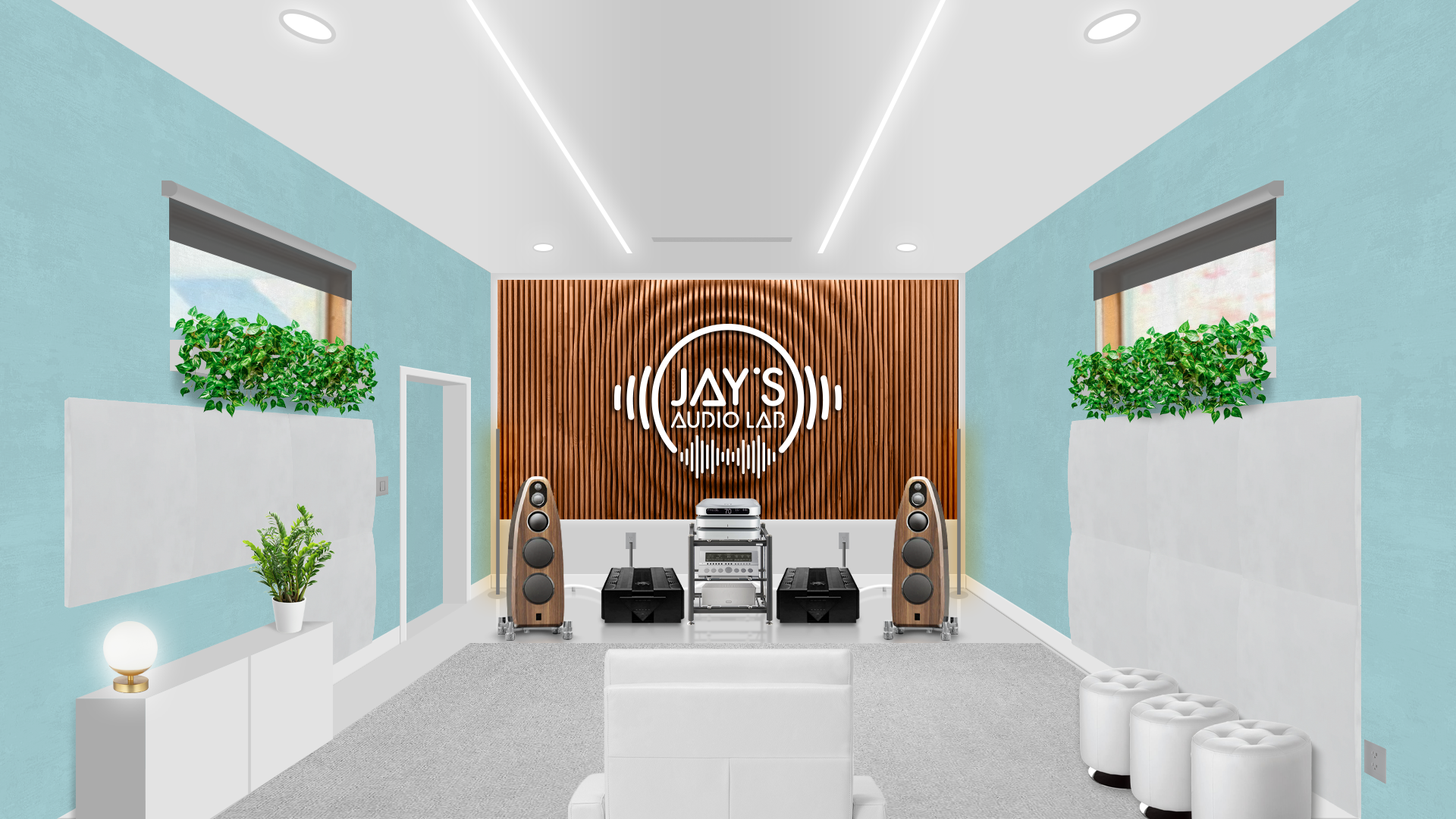
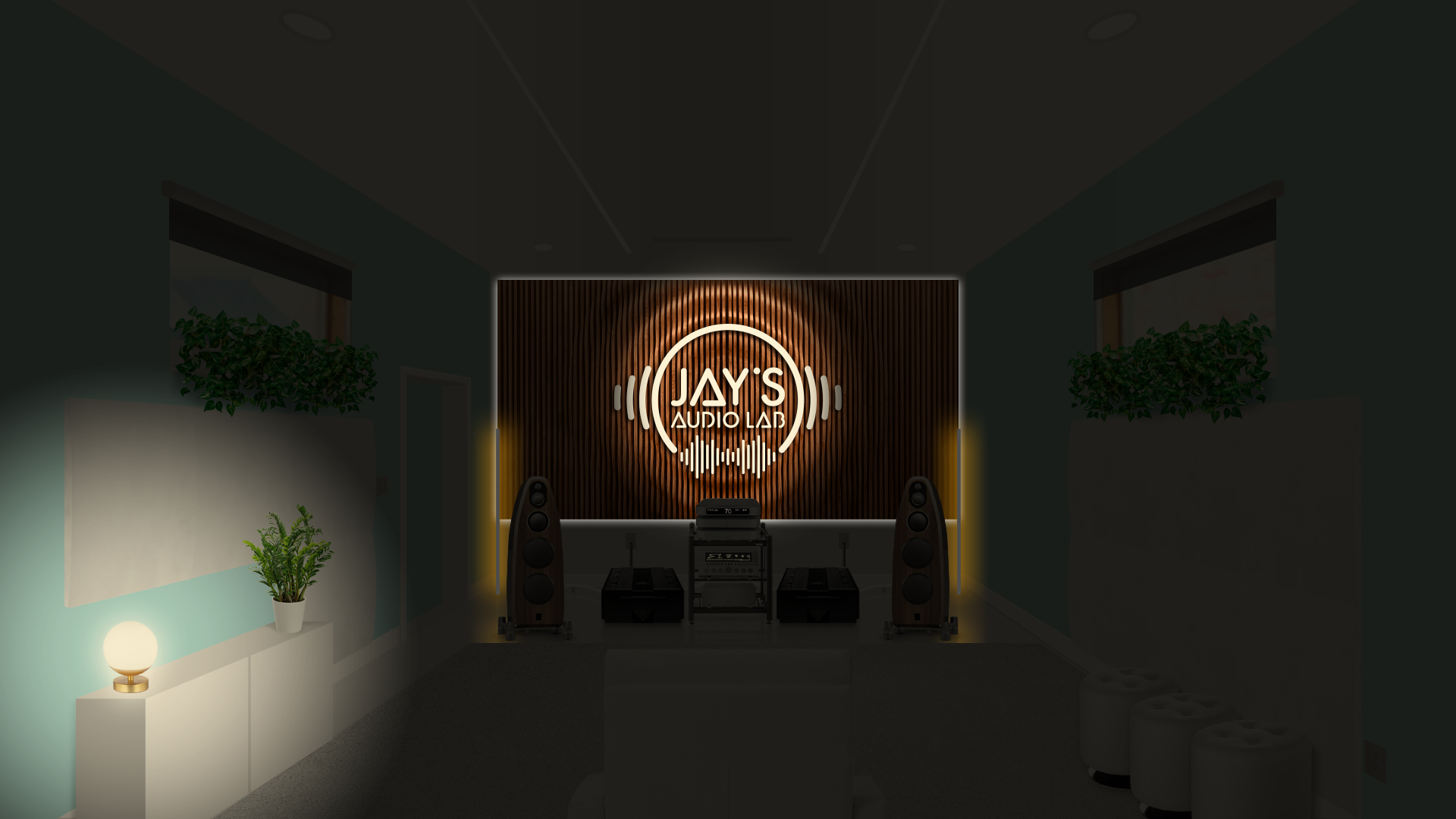
Pantone 3272
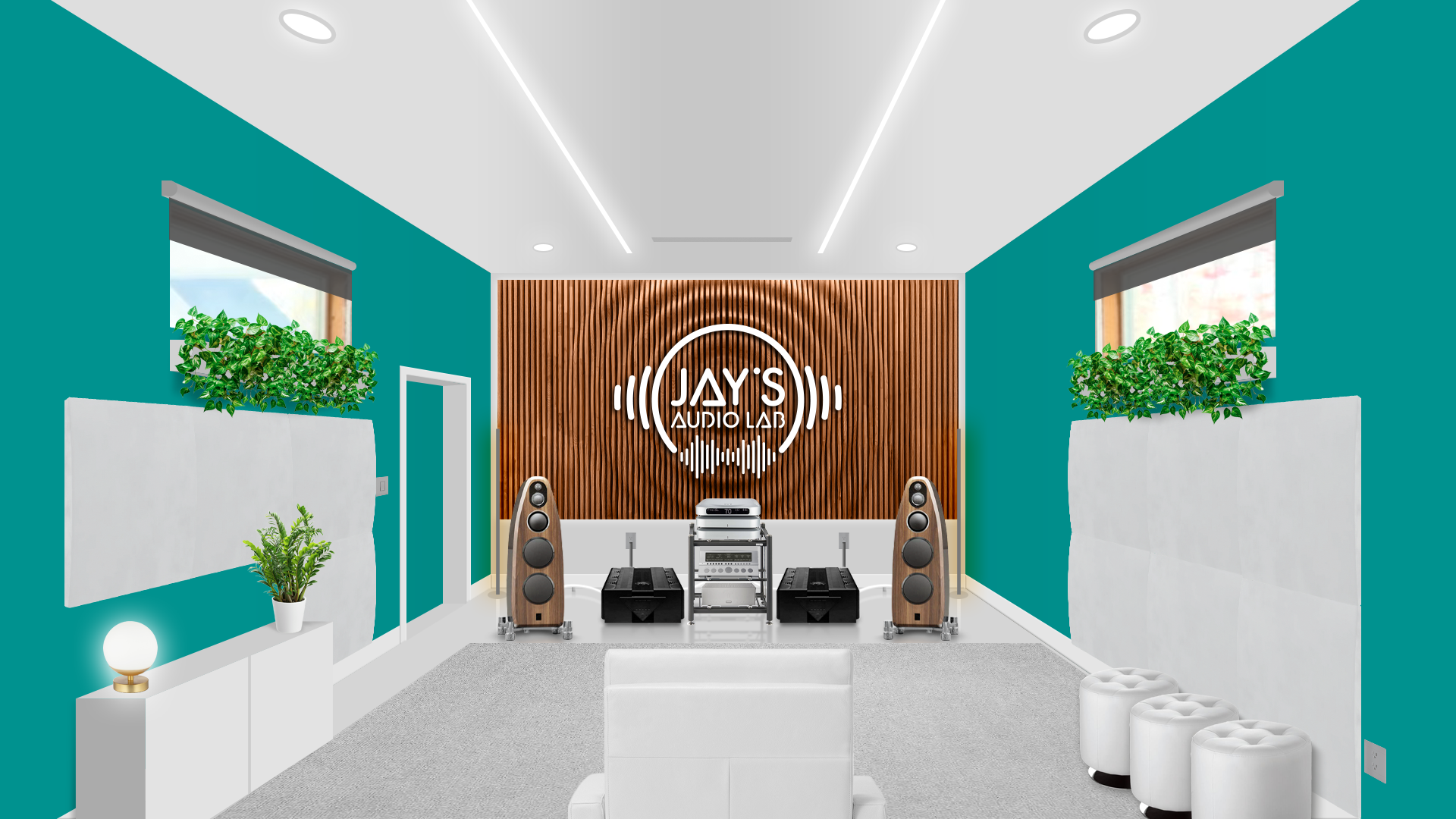
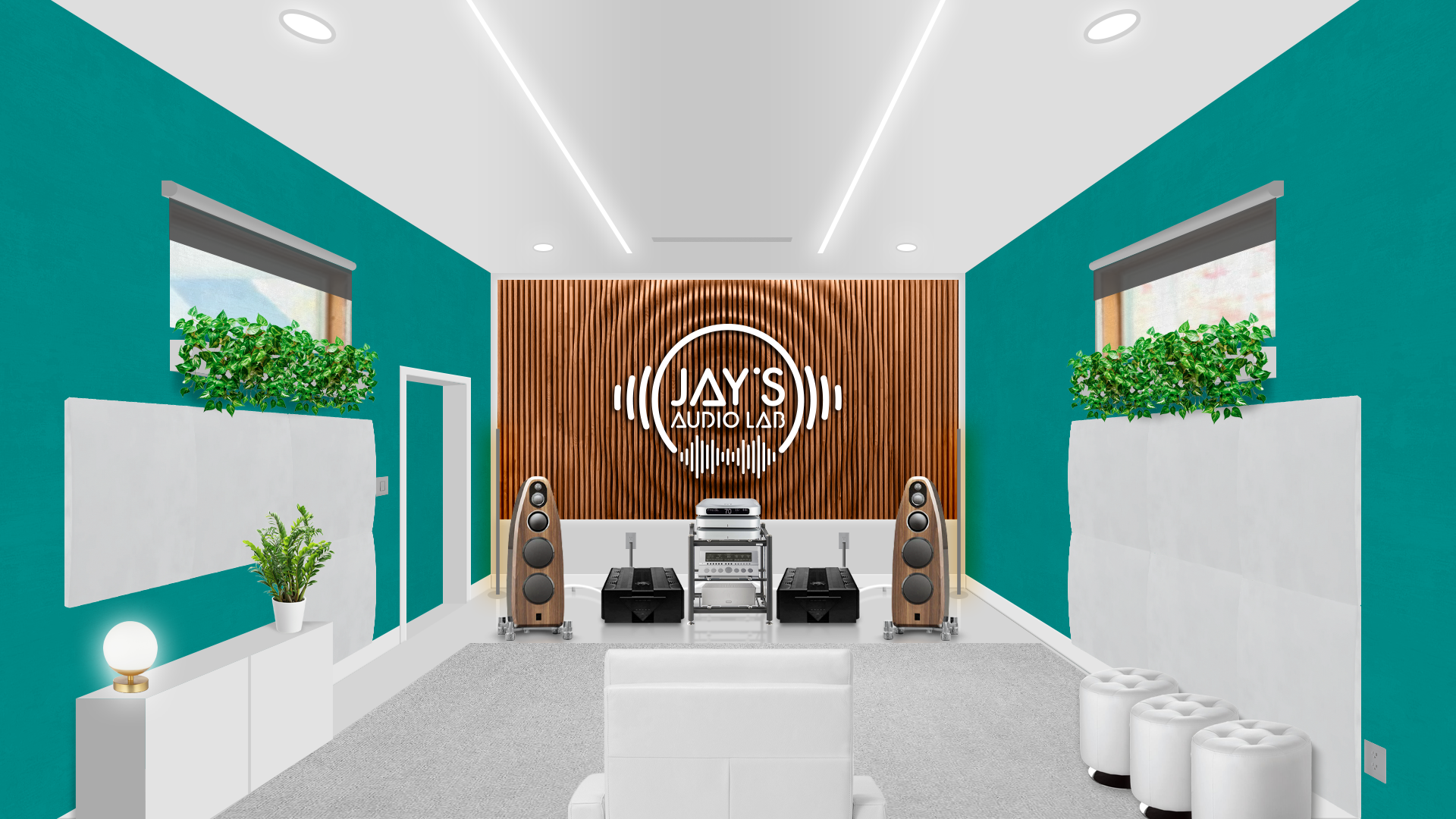
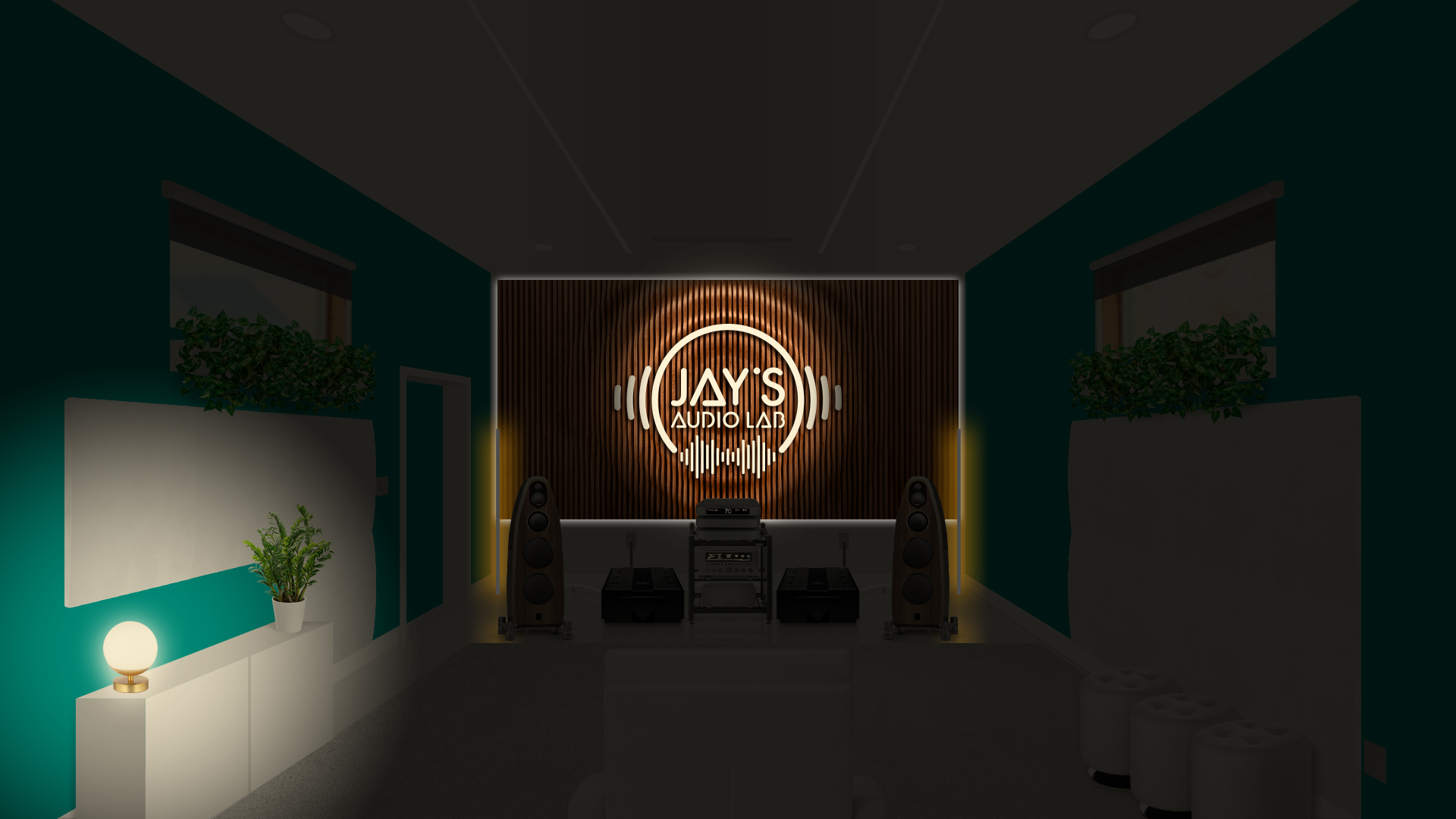
The chosen decor follows a personal taste. I took the liberty to set the room without any official guideline. It’s just an exercise of style. Plants (Pothos, a non demanding plant that grows usually without problems), ottomans, cabinet, rug, blinds, front and side sound treatment are just hypothetical. The wooden wall on the front wall is a Parametric Wall by Ekustik. I think it would be a nice addition, both acoustically and esthetically. The carved (by CNC machines, for example) and white painted logo applied on it would furthermore add a personal touch. It could be made in wood as well to avoid any acoustical annoyances.
The same goes for the depicted audio rack: it’s just for simulation purposes. I tried to keep the sizes of the audio gear real in order to get a plausible effect. The accent lighting features two light sticks in the corners, a table lamp on the cabinet and a bezel light strip tucked behind the perimeter of the Parametric Wall. A spot light from the floor could gently illuminate the logo in case.
Here’s a simulation of the room with closed blinds. Not a big difference considering the seemingly abundant artificial light available (assuming my simulated lighting is realistic). The blinds could be motorized either with batteries (pro: no cables – cons: climb to periodically change the batteries) or wired (pro: no maintenance – cons: wire in sight).
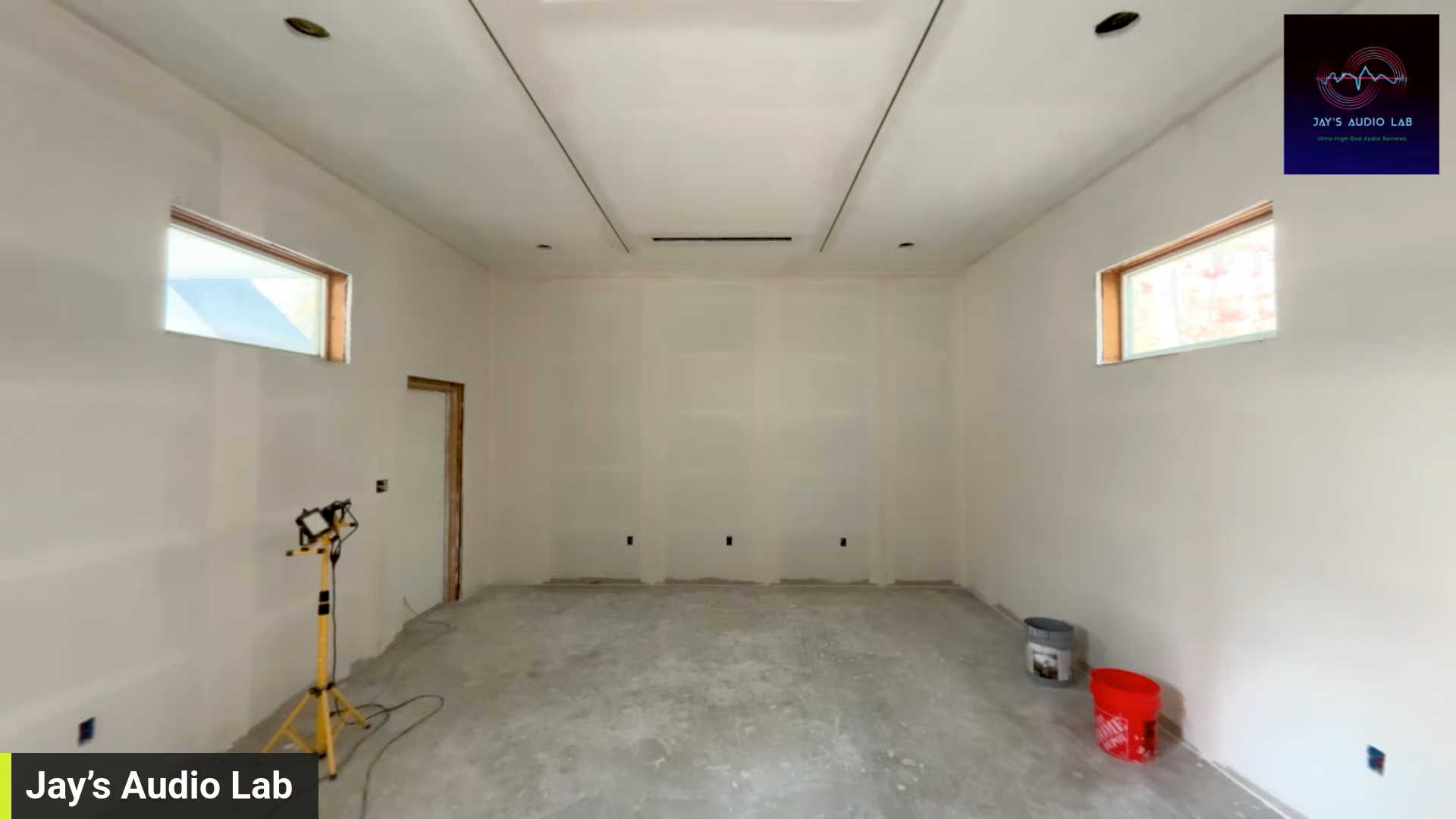
For the record, this is the original screenshot from your video that gave me inspiration to “play” with your room:
That’s it. I hope the effort will be helpful. All the best for the new project. It’s looking good and promising.
